Integrative Deep Process
For those seeking support that considers body, mind and emotion.
Explore this session Tatchi MatzINTEGRATIVE BODY
EXPLORE MY WORK
My work is grounded in an integrative body-oriented approach, where different therapies are woven together in a coherent, deep and respectful way.
Rather than applying techniques, the focus is on listening to the body and understanding which layers are ready to be accessed at each moment of the process.
No approach is used in isolation or automatically. Each session is guided by the body’s real needs, in its own time.
Book your free initial consultation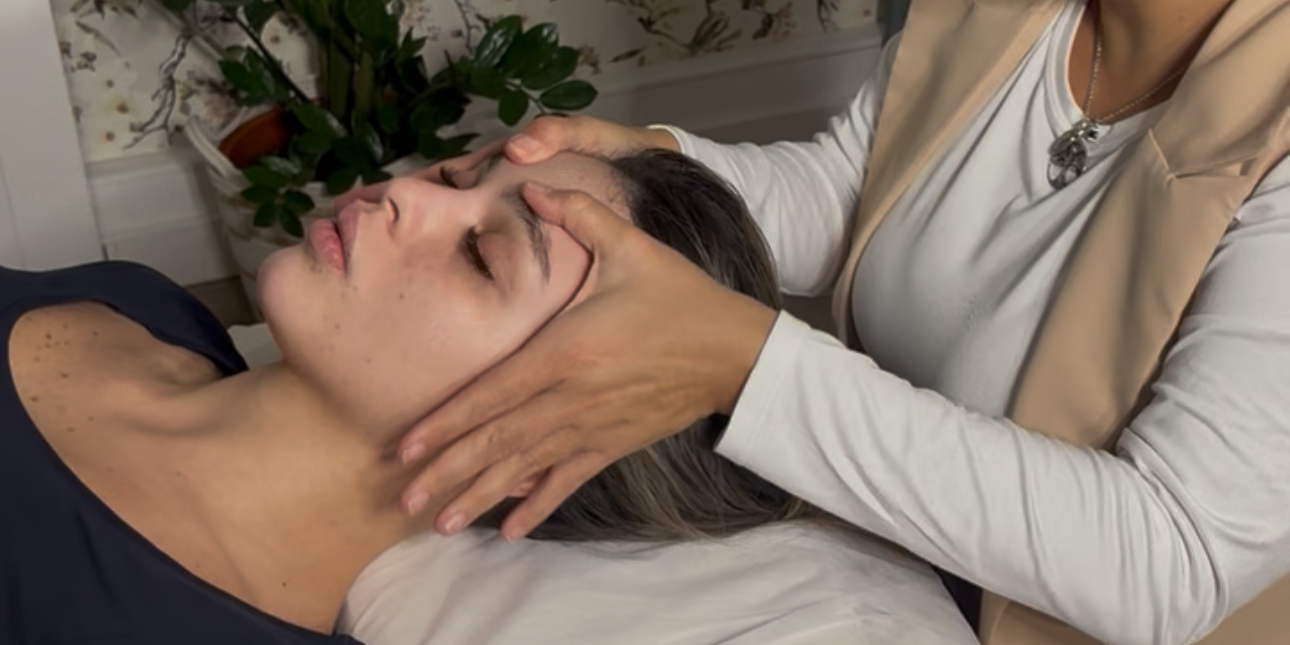
THE BODY’S OWN PACE
The body releases what is more superficial and accessible first, gradually moving toward deeper levels of reorganization.
This rhythm is not imposed — it emerges through body listening, nervous system regulation and each person’s personal history.
The approaches described on this page are integrated into all the types of sessions I offer, always aligned with the client’s intention and the body’s readiness.
MAIN BODY APPROACHES
These approaches are integrated into the sessions according to each person’s needs, timing and body readiness.
John Upledger
Craniosacral Therapy is a gentle manual approach that works with the central nervous system and the body’s subtle rhythms.
It supports nervous system regulation, deep tension release and the development of greater calm, presence and integration.
It is particularly helpful for people experiencing chronic pain, prolonged stress, anxiety, fatigue and emotional overload.
John Upledger
The body holds memories of physical and emotional experiences. Somato-Emotional Release allows these layers to emerge safely, at the body’s own pace.
This approach supports the release of tension linked to past experiences and promotes deeper integration between body, emotion and awareness.
Nothing is forced — only what is ready to be processed arises.
Jean Pierre Barral
Visceral Manipulation focuses on the mobility and relationship between organs, tissues and body structures.
When organs lose their natural mobility, they may contribute to compensation patterns, musculoskeletal pain, fatigue and functional imbalances.
This work supports the restoration of visceral mobility, improves communication between body systems and reduces deep tension.
Jean Pierre Barral
Neural Manipulation focuses on the mobility and functional quality of peripheral and central nerves.
Compression, inflammation or restrictions in neural mobility may lead to symptoms such as: loss or alteration of sensation, tingling, acute or chronic pain, limited movement, slower recovery processes after herniated discs or injuries.
Through a subtle manual touch, this approach supports the release of neural restrictions, encouraging neural regeneration and improved movement organization.
This work is always integrated into the broader therapeutic process and applied only when the body shows readiness.
Bruno Chickly
Physical and emotional trauma, as well as prolonged states of stress, can create functional imbalances within brain structures and the nervous system.
Through a subtle manual approach it is possible to access these structures respectfully, supporting nervous system reorganization.
This work is applied only when the body shows readiness and is always integrated into the broader therapeutic process.
My osteopathic-based approach is grounded in tissue listening, respect for the body’s natural movements and the restoration of homeostasis.
I do not use forced adjustments or thrust techniques. The work is subtle, allowing the body itself, through its natural micromovements, to find pathways for realignment and reorganization.
This gentle touch supports self-regulation, the release of deep tension and the restoration of balance between body systems.
INTEGRATIVE TOOLS
Alongside the main body-based approaches, integrative tools may support the process when needed. They are not part of every session.
Polestar Pilates
Pilates is used as a tool for body awareness and movement integration, especially when the body is already undergoing reorganization.
The focus is not physical performance, but perception, respect for limits and the rebuilding of more efficient and conscious movement patterns.
In persistent pain, the body often develops protective cycles based on the memory of past pain - and the anticipation of future pain.
Movement re-education works on reprogramming this memory, helping the nervous system recognize new movement possibilities with greater safety, efficiency and reduced threat.
The goal: to restore the body's confidence in moving freely again.
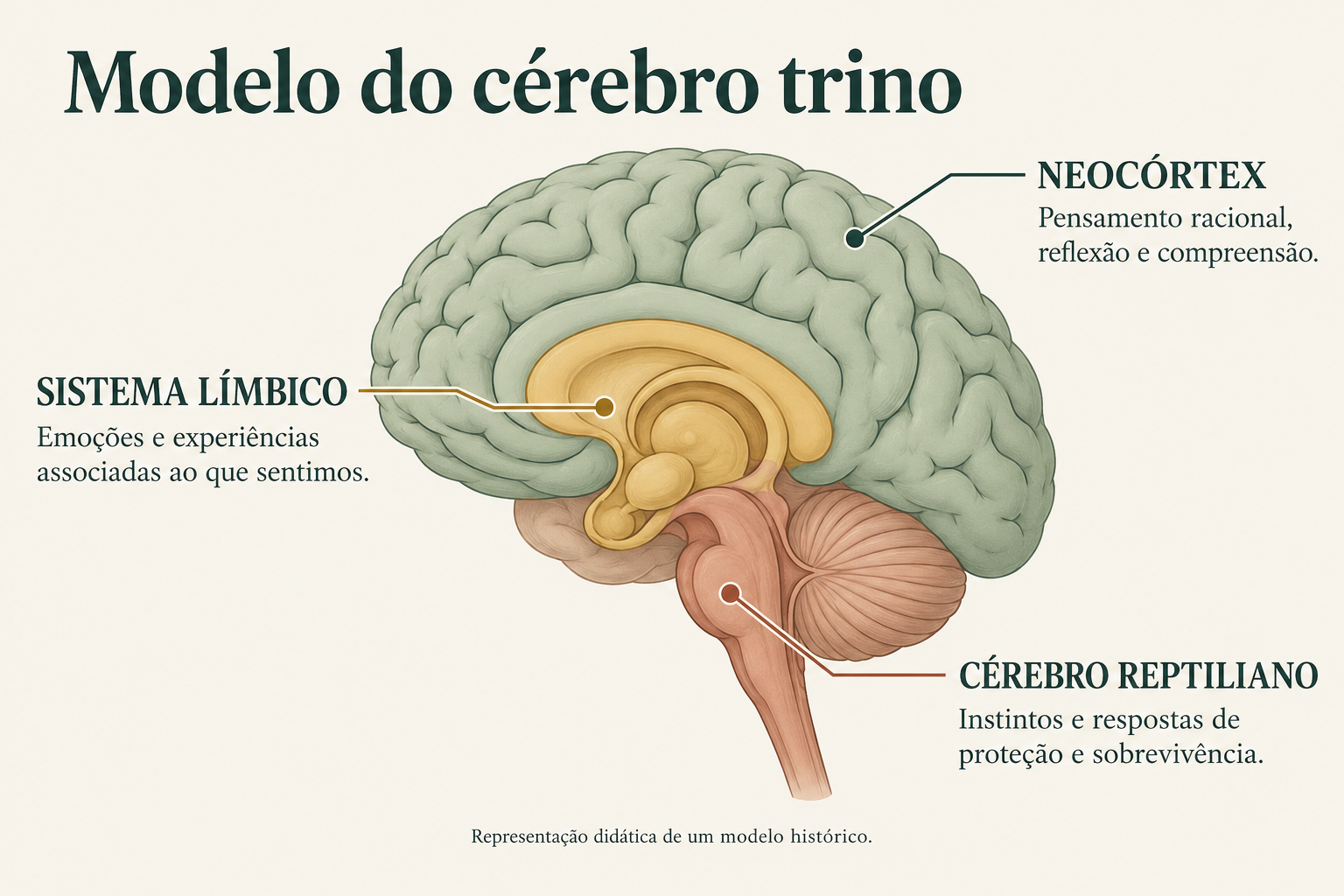 Enlarge image · Portuguese illustration
An educational representation of the triune brain model.
Understanding how the nervous system works — how thoughts, emotions, past experiences and physical symptoms are connected — is itself therapeutic.
Neuroscience principles provide a foundation for more conscious, integrated and sustainable therapeutic processes.
Vianna Stibal
ThetaHealing may be used as a complementary tool to access the unconscious, deeper needs and sensations that emerge during the therapeutic process.
Applied respectfully and never replacing body-based work.
Sustainable transformation requires coherence between the body's process and daily life — choices, behaviors, internal language, relationships.
Life Coaching supports the alignment of behavioral patterns and habits with what truly makes sense for each person.
It helps prevent recurring somatization and promotes greater coherence between body, mind and everyday life.
WAYS TO WORK TOGETHER
For those seeking support that considers body, mind and emotion.
Explore this sessionFocused support for physical pain, mobility and restoring movement.
Explore this sessionListening, body awareness and guided practices, even at a distance.
Explore this sessionA FIRST CONVERSATION
You do not need to choose a technique before getting in touch. The initial consultation is a space to understand your needs and explain the approaches most appropriate for you.
Free initial consultation · 30 minutes
Contact me on WhatsApp